Introduction: Navigating Global Healthcare Data Privacy
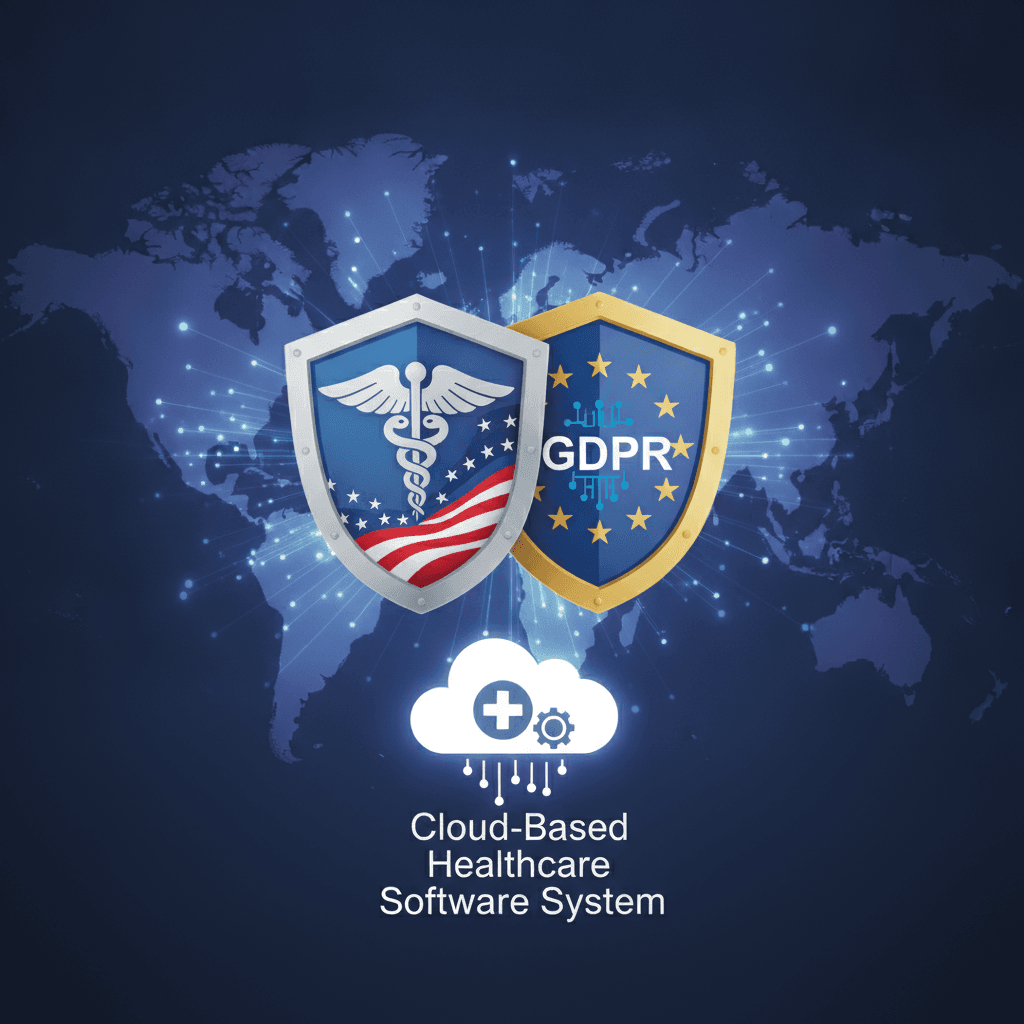
In today's interconnected world, healthcare software increasingly serves a global patient base, necessitating adherence to a complex web of data privacy regulations. Two of the most prominent and far-reaching are the Health Insurance Portability and Accountability Act (HIPAA) in the United States and the General Data Protection Regulation (GDPR) in the European Union. While both aim to protect sensitive personal health information, their scopes, definitions, and enforcement mechanisms differ significantly.
For developers, providers, and operators of healthcare software, understanding the nuances of these regulations is not just a legal obligation but a critical foundation for trust and operational integrity. This article provides a comprehensive HIPAA vs GDPR comparison healthcare software professionals need to navigate the intricate landscape of data privacy laws for healthcare technology and ensure compliance with global healthcare data protection standards.
Understanding HIPAA: Protecting Health Information in the U.S.
Enacted in 1996, HIPAA is a U.S. federal law that establishes national standards for the protection of certain health information. It applies primarily to 'Covered Entities' (health plans, healthcare clearinghouses, and most healthcare providers) and their 'Business Associates' (individuals or entities that perform functions or activities on behalf of, or provide services to, a covered entity involving the use or disclosure of individually identifiable health information).
Key Components of HIPAA:
- Privacy Rule: Sets standards for the use and disclosure of Protected Health Information (PHI). It gives individuals rights over their health information, including the right to examine and obtain a copy of their health records, and to request corrections.
- Security Rule: Specifies administrative, physical, and technical safeguards for electronic PHI (ePHI) to ensure its confidentiality, integrity, and availability. This is particularly relevant for healthcare software, dictating requirements for access control, audit controls, integrity controls, and transmission security.
- Breach Notification Rule: Requires covered entities and business associates to notify affected individuals, the U.S. Department of Health and Human Services (HHS), and in some cases, the media, of a breach of unsecured PHI.
PHI under HIPAA includes any information about health status, provision of healthcare, or payment for healthcare that can be linked to a specific individual.
Understanding GDPR: Comprehensive Data Protection in the EU
The GDPR, which came into effect in May 2018, is a landmark regulation designed to harmonize data privacy laws across Europe, protect and empower all EU citizens' data privacy, and reshape the way organizations across the region approach data privacy. Unlike HIPAA, GDPR protects a broader category of 'personal data' and applies to any organization, anywhere in the world, that processes personal data of individuals residing in the EU, regardless of where the processing takes place.
Key Principles and Rights Under GDPR:
- Lawfulness, Fairness, and Transparency: Personal data must be processed lawfully, fairly, and in a transparent manner.
- Purpose Limitation: Data must be collected for specified, explicit, and legitimate purposes and not further processed in a manner that is incompatible with those purposes.
- Data Minimization: Only data adequate, relevant, and limited to what is necessary for the processing purposes should be collected.
- Accuracy: Personal data must be accurate and kept up to date.
- Storage Limitation: Data should be kept for no longer than is necessary.
- Integrity and Confidentiality: Data must be processed in a manner that ensures appropriate security, including protection against unauthorized or unlawful processing and against accidental loss, destruction, or damage.
GDPR also grants data subjects extensive rights, including the right to access, rectification, erasure (the 'right to be forgotten'), restriction of processing, data portability, and objection to processing.
HIPAA vs GDPR: A Direct Comparison for Healthcare Software
While both regulations aim for data protection, their approaches and scopes present distinct challenges for healthcare software developers.
Scope and Applicability:
- HIPAA: Primarily sectoral, applying to specific entities within the U.S. healthcare system and their business associates. Focuses on PHI.
- GDPR: Extraterritorial and broader, applying to any organization (healthcare or otherwise) that processes the personal data of EU residents, regardless of the organization's location. This includes 'special categories of personal data,' which explicitly includes health data.
Definitions of Protected Data:
- HIPAA: Defines Protected Health Information (PHI) as individually identifiable health information transmitted or maintained in any form or medium.
- GDPR: Defines Personal Data broadly as any information relating to an identified or identifiable natural person. It further categorizes 'health data' as a 'special category' requiring heightened protection, which includes genetic data and biometric data.
Consent Mechanisms:
- HIPAA: Implied consent is often sufficient for treatment, payment, and healthcare operations. Explicit authorization is usually required for marketing or research purposes.
- GDPR: Requires explicit, informed, unambiguous, and freely given consent for processing special categories of personal data, including health data. This 'opt-in' standard is much stricter.
Data Subject Rights:
- HIPAA: Provides rights to access, amend, and receive an accounting of disclosures of PHI.
- GDPR: Offers more extensive rights, including the right to access, rectification, erasure, restriction of processing, data portability, and objection. The 'right to be forgotten' (erasure) is a significant difference.
Breach Notification:
- HIPAA: Requires notification without undue delay and no later than 60 days after discovery of a breach.
- GDPR: Mandates notification to the supervisory authority within 72 hours of becoming aware of a breach, where feasible, unless the breach is unlikely to result in a risk to the rights and freedoms of natural persons. Affected individuals must also be notified if there's a high risk.
Enforcement and Penalties:
- HIPAA: Penalties range from $100 to $50,000 per violation, with annual caps up to $1.5 million, depending on the level of negligence. Criminal charges are also possible.
- GDPR: Infringements can result in fines up to €20 million or 4% of the organization’s total worldwide annual turnover, whichever is higher, for the most serious violations.
Challenges for Healthcare Software in Dual Compliance
Developing and deploying healthcare software that meets both HIPAA and GDPR standards presents unique challenges:
- Jurisdictional Complexity: A single software platform may process data from both U.S. and EU patients, requiring a 'least common denominator' approach to compliance or segmented data handling.
- Consent Management: Reconciling HIPAA's often implied consent with GDPR's explicit, granular consent requirements for health data can be technically complex.
- Data Residency and Transfers: GDPR has strict rules on transferring personal data outside the EU/EEA, often requiring specific legal mechanisms (e.g., Standard Contractual Clauses), which might conflict with existing cloud infrastructure or data storage solutions.
- Implementing Data Subject Rights: Ensuring the technical capability to fulfill GDPR's broader range of data subject rights (like erasure or portability) while maintaining necessary records for HIPAA compliance (e.g., for treatment records) requires careful architectural design.
- Vendor Management: Any third-party service provider (cloud hosts, analytics tools, etc.) used by the healthcare software must also comply with the relevant regulations.
Strategies for Achieving Dual HIPAA and GDPR Compliance
Achieving compliance with both HIPAA and GDPR requires a robust, proactive strategy embedded throughout the software development lifecycle and operational processes.
1. Data Mapping and Inventory
Understand exactly what data your software collects, where it's stored, who has access, and for what purpose. This forms the foundation for any compliance effort, helping identify both PHI and personal data, especially health data.
2. Privacy by Design and Default
Integrate privacy considerations from the very outset of software design and development. This means building in features like data minimization, pseudonymization, and strong security controls by default. This approach is fundamental for both regulations.
3. Robust Security Measures
Implement comprehensive technical and organizational security measures to protect data against unauthorized access, loss, or disclosure. This includes:
- Encryption (in transit and at rest)
- Access controls and authentication
- Regular vulnerability assessments and penetration testing
- Incident response plans
These measures are critical for the HIPAA Security Rule and GDPR's principle of integrity and confidentiality. For more on integrating advanced systems, consider exploring topics like advanced healthcare software EHR integration to ensure secure and compliant data flows.
4. Granular Consent Management
Develop flexible consent mechanisms that allow users to grant or withdraw consent for different types of data processing, meeting GDPR's strict requirements. For U.S. patients, ensure HIPAA authorizations are also handled correctly.
5. Data Processing Agreements (DPAs)
For all third-party vendors and partners, establish explicit Data Processing Agreements (under GDPR) and Business Associate Agreements (BAAs under HIPAA) that clearly define roles, responsibilities, and data protection obligations.
6. Appointing a Data Protection Officer (DPO)
Under GDPR, certain organizations are required to appoint a DPO. Even if not mandatory, a DPO or a dedicated privacy officer can be invaluable in overseeing compliance efforts, especially for complex dual-jurisdictional operations.
7. Staff Training and Awareness
Regularly train all personnel involved in handling or processing patient data on the specifics of HIPAA and GDPR, emphasizing their roles in maintaining compliance.
8. Seeking Expert Guidance
Navigating the intricacies of both HIPAA and GDPR simultaneously is challenging. Many organizations benefit from specialized healthcare software compliance services or consulting from reputable sources like HHS for HIPAA guidance. Engaging in HIPAA GDPR healthcare software implementation with experienced consultants can streamline the process, ensuring your software is compliant from the ground up. Furthermore, seeking secure medical software development consulting can help embed security and privacy features directly into your product architecture, preventing costly remediation later.
Conclusion: A Path to Global Compliance
The convergence of HIPAA and GDPR presents a significant compliance hurdle for global healthcare software. However, by adopting a privacy-centric approach, understanding the core tenets of each regulation, and leveraging expert guidance, organizations can build robust software solutions that protect patient data effectively, no matter where in the world their patients reside.
Proactive compliance is not just about avoiding penalties; it's about building trust, fostering innovation, and delivering the highest standard of care in a data-driven healthcare ecosystem. For any organization developing or operating healthcare software, a thorough understanding of these global data protection standards is non-negotiable for long-term success and ethical operation.