
Navigating the Complexities of Enterprise Security with TWO44
In today's interconnected digital landscape, enterprise security is paramount. As organizations expand, so does the complexity of managing user access, posing significant challenges to data integrity, compliance, and operational efficiency. Without a robust framework, the risk of unauthorized access, data breaches, and non-compliance escalates dramatically. This is where comprehensive user management and Role-Based Access Control (RBAC) become indispensable.
At TWO44 Software, we specialize in developing sophisticated enterprise RBAC solutions and user access management software designed to secure your digital assets, streamline operations, and ensure regulatory adherence. Our solutions are tailored for businesses seeking to achieve unparalleled security and control over their enterprise environments, whether in Hyderabad, Bengaluru, other parts of India, or the USA.
Understanding User Management in the Enterprise Context
User management encompasses the processes and technologies involved in identifying, authenticating, and authorizing users to access resources within an organization's IT systems. It's not merely about creating accounts; it's about defining who can access what, under what conditions, and for how long. Effective user management is the bedrock of enterprise security, preventing unauthorized access and maintaining the integrity of sensitive data.
For large enterprises, managing hundreds or thousands of users, each with varying roles and responsibilities, can be a daunting task. Manual processes are prone to errors, time-consuming, and unsustainable. This necessitates automated, intelligent systems that can adapt to changing organizational structures and security demands.
What is Role-Based Access Control (RBAC)?
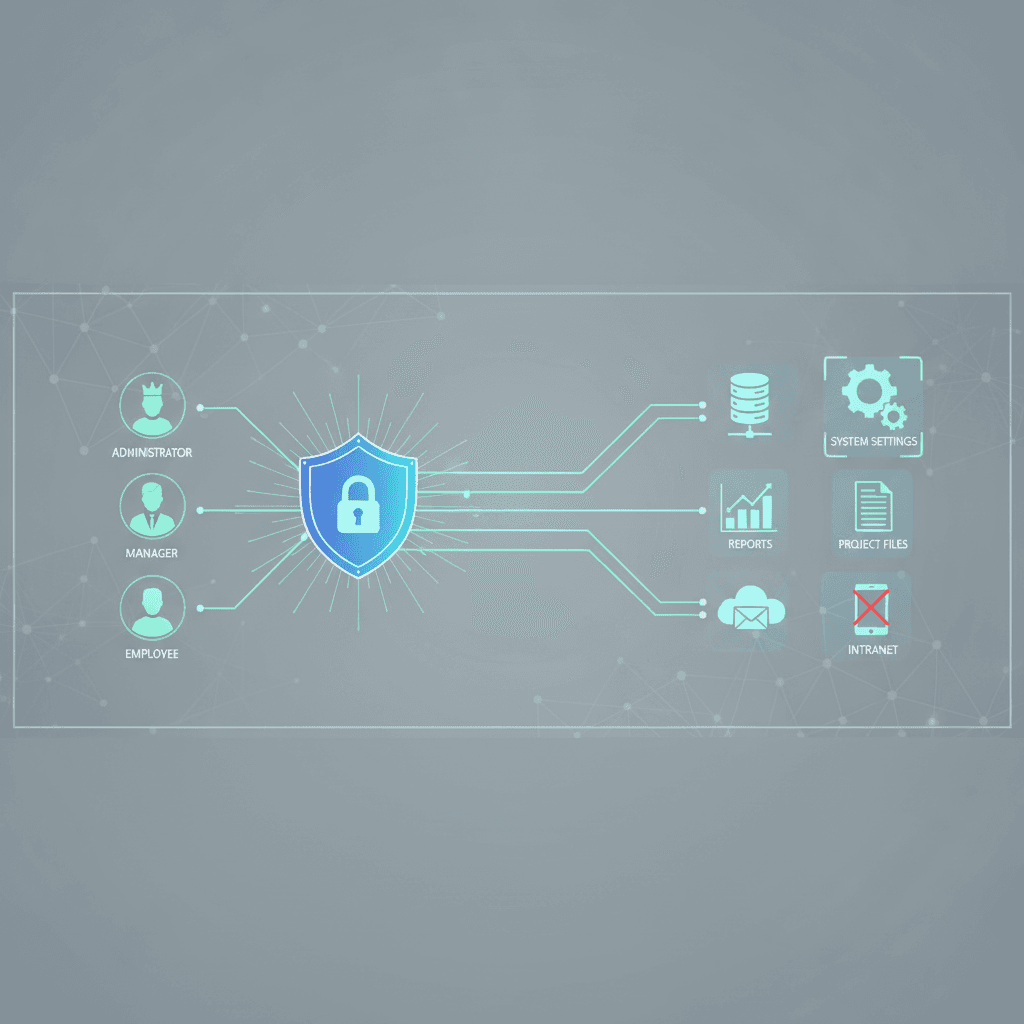
At its core, what is Role-Based Access Control? RBAC is a security mechanism that restricts system access to authorized users based on their role within an organization. Instead of assigning individual permissions to each user, RBAC groups permissions into roles (e.g., 'Administrator,' 'Editor,' 'Viewer,' 'HR Manager'). Users are then assigned one or more roles, inheriting the permissions associated with those roles.
This approach simplifies access management significantly. When a user's role changes, their access permissions are automatically updated by modifying their assigned roles, rather than individually adjusting numerous permissions. This not only enhances security by enforcing the principle of least privilege but also drastically reduces administrative overhead.
The Indispensable Benefits of Enterprise User Access Management and RBAC
Implementing a robust RBAC framework offers numerous advantages, fundamentally transforming how enterprises manage security and operations. Understanding these enterprise user access management benefits is crucial for any organization considering such a solution:
- Enhanced Security: By enforcing the principle of least privilege, users only gain access to resources essential for their roles, minimizing the attack surface and reducing the risk of internal and external breaches.
- Streamlined Administration: Managing permissions based on roles is far more efficient than managing individual permissions, especially in large organizations. This frees up IT resources for more strategic tasks.
- Improved Compliance: RBAC provides a clear, auditable trail of who has access to what, which is vital for meeting regulatory requirements such as GDPR, HIPAA, SOX, and more. It simplifies audits and demonstrates adherence to security policies.
- Reduced Costs: Automating user provisioning and de-provisioning, along with simplified audits, leads to significant cost savings in IT operations and compliance efforts.
- Greater Operational Efficiency: Users gain access to necessary tools and data much faster, improving productivity and reducing waiting times associated with manual access requests.
- Scalability: As an organization grows, adding new users or departments with RBAC is straightforward, ensuring security policies scale seamlessly without becoming unwieldy.
Key Features of Advanced Enterprise RBAC Solutions
For businesses seeking cutting-edge user access management software for businesses, TWO44's solutions go beyond basic role assignment, offering a suite of features designed for the modern enterprise:
- Granular Role Definition: Ability to create highly specific roles with fine-grained permissions across various applications and data sources.
- Automated Provisioning/De-provisioning: Automatically grant or revoke access based on HR system integration (e.g., employee onboarding/offboarding).
- Auditing and Reporting: Comprehensive logs of all access activities, changes to roles, and user permissions, crucial for compliance and security forensics.
- Single Sign-On (SSO) Integration: Seamless integration with SSO providers for enhanced user experience and reduced password fatigue.
- Multi-Factor Authentication (MFA): Adding an extra layer of security requiring users to provide multiple verification factors for access.
- Policy-Based Access Control: Dynamically adjusts access based on context (e.g., device, location, time of day).
How to Implement RBAC Effectively in an Enterprise
Successfully adopting RBAC requires careful planning and execution. To implement role based access control enterprise-wide, consider these best practices:
- Define Roles Clearly: Start by identifying the distinct roles within your organization and the specific tasks and resources associated with each. This might involve a detailed analysis of job functions.
- Inventory Resources: Catalog all systems, applications, and data that require access control. Understand their sensitivity levels.
- Map Permissions to Roles: Assign the necessary permissions to each defined role, ensuring the principle of least privilege is strictly adhered to.
- Start Small and Iterate: Begin implementation with a pilot group or a specific department. Learn from the initial rollout and refine your roles and policies before a broader deployment.
- Integrate with Existing Systems: Ensure your RBAC solution can integrate seamlessly with your existing directories (e.g., Active Directory, LDAP), HR systems, and other critical business applications. For example, similar integration capabilities are vital for comprehensive solutions like clinic management software with EHR integration.
- Regularly Review and Audit: Roles and permissions are not static. Conduct periodic reviews and audits to ensure they remain relevant, compliant, and secure, especially as organizational structures or software needs change. This continuous management is as critical as managing various other business software, like optimizing ABA practice management software.
- Provide Training: Educate users and administrators on the new system, its benefits, and how to use it effectively.
For further insights into secure access controls, refer to reputable sources such as the NIST Guidelines for Access Control.
TWO44's Approach to Enterprise Security Solutions
TWO44 Software is dedicated to providing robust, scalable, and intuitive security solutions that empower enterprises. Our user management and RBAC platforms are built with a focus on ease of use, high security standards, and seamless integration capabilities.
We understand that every enterprise is unique. That's why our solutions are highly customizable, allowing you to define roles, policies, and access workflows that perfectly align with your specific operational needs and compliance mandates. From automated provisioning to advanced auditing, our software gives you complete control over who accesses your critical resources, minimizing risk and maximizing productivity.
Partner with TWO44 for Unrivaled Enterprise Security
In a world where cyber threats are constantly evolving, relying on outdated or inadequate user management systems is no longer an option. Future-proof your enterprise security with TWO44's expert solutions.
Whether you are looking to enhance an existing system or build a comprehensive security framework from the ground up, TWO44 Software has the expertise and technology to support your goals. We help businesses across Hyderabad, Bengaluru, the wider Indian market, and the USA to safeguard their operations and data with cutting-edge RBAC and user access management software.
Contact TWO44 Software today to learn how our enterprise RBAC solutions can transform your security posture and empower your business to thrive securely.