The Problem: Manual Verification Kills ABA Revenue Cycles
An ABA clinic billing coordinator spends 3–4 hours every morning calling insurance companies. Hold times average 22 minutes per call. By the time eligibility is confirmed for Monday's new intakes, it is Wednesday — and two families have already started services without verified coverage. Denied claims from missing prior authorizations cost the clinic $40,000+ in write-offs last quarter.
This is the norm, not the exception. ABA therapy has among the most complex insurance workflows in outpatient healthcare: payer-specific authorization requirements, session-level unit billing, re-authorization deadlines tied to treatment plan reviews, and state mandate variations for autism coverage. Spreadsheets and phone calls do not scale when you add a second or third location.
The revenue impact is severe. Industry data shows ABA clinics lose 8–15% of collectible revenue to verification delays and authorization gaps. For a clinic billing $2M annually, that is $160,000–$300,000 left on the table. Google Search Console data shows growing search demand for "tools for automating insurance verification in aba clinics" — clinic directors are actively looking for solutions.
Common failure points include: verifying eligibility once at intake but never re-checking, missing re-authorization deadlines because they live in a coordinator's personal calendar, and submitting claims before authorization numbers are attached. Our ABA therapy software features checklist covers billing automation requirements in detail.
TWO44's Solution: Automated Verification Pipeline
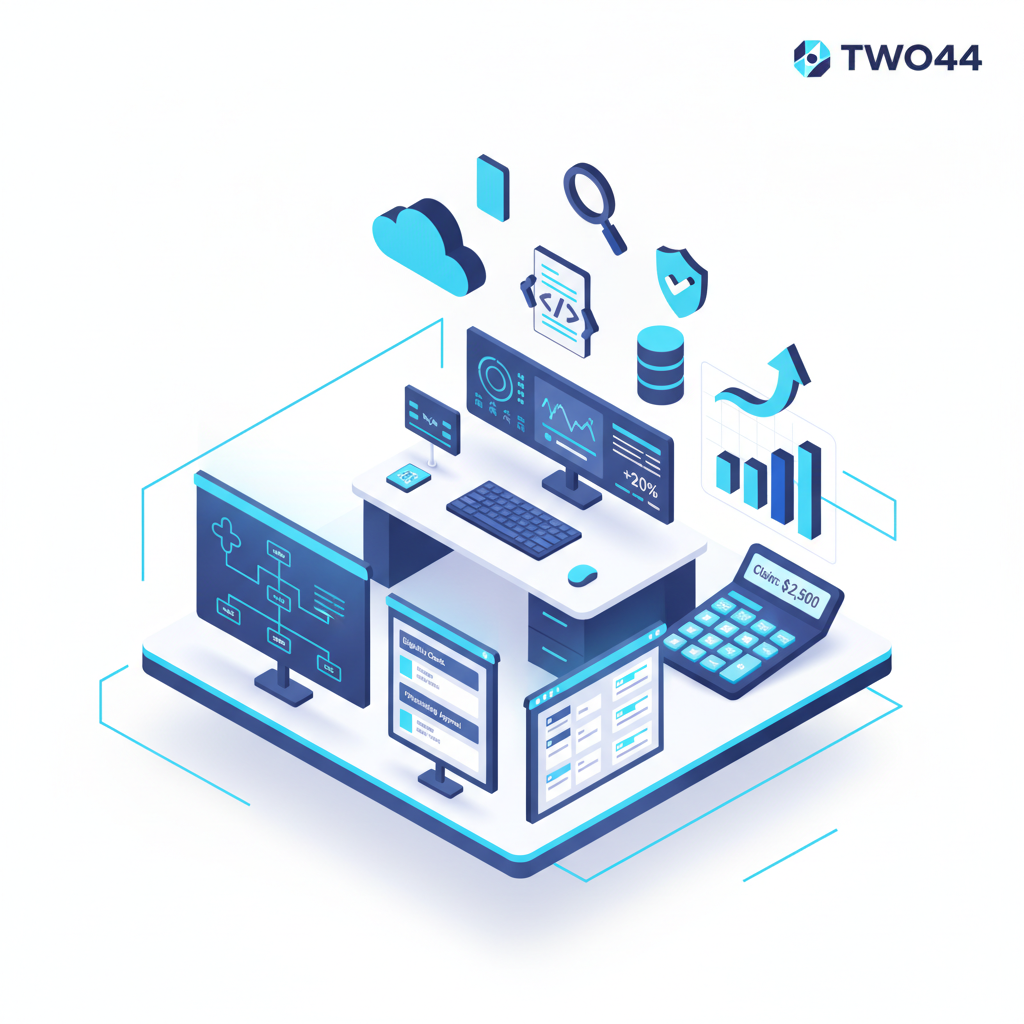
We built an insurance verification and revenue cycle automation module integrated into the therapy operations platform — triggered automatically when intake is completed and running continuously in the background.
Automated eligibility verification: When a parent submits insurance details during digital intake, the system queries payer eligibility via clearinghouse API integration. Results return in under 60 seconds: active coverage status, copay/deductible amounts, plan type, and autism benefit specifics. Failed verifications trigger an alert to the billing coordinator with the payer phone number and member ID pre-populated.
Prior authorization workflow: Authorization requirements are mapped per payer and plan type. The system generates authorization request templates with required clinical documentation attached. Status tracking shows submitted, pending, approved, or denied with expiration dates. Automated reminders fire 30, 14, and 7 days before authorization expiration.
Claim submission automation: Session data flows from therapist documentation into billing-ready claim formats. Pre-submission validation checks: authorization number present and active, service codes match authorized units, provider NPI enrolled with payer, and no duplicate claim detection. Clean claims submit electronically; flagged claims queue for coordinator review with specific error reasons.
Revenue cycle dashboard: Real-time visibility into accounts receivable aging, denial rates by payer, authorization utilization (units used vs. authorized), and verification backlog. Billing managers see which locations have the highest denial rates and which payers need renegotiation.
All insurance data is stored within the HIPAA-compliant architecture described in our HIPAA-compliant intake use case — encrypted, audited, and accessible only to billing-role staff.
Proof of Work: Revenue Cycle Transformation
The insurance automation module is deployed within the platform we built for Autizum, supporting billing operations across their North Carolina clinic network. The billing team transitioned from phone-based verification to an automated-first workflow over a 60-day rollout.
Measurable outcomes (de-identified):
- Insurance verification time reduced from 45 minutes (manual phone) to under 5 minutes (automated API check) per new patient
- Prior authorization tracking moved from spreadsheet to automated alerts — zero missed re-authorization deadlines in 12 months post-launch
- Clean claim rate improved from 78% to 94% after pre-submission validation rules were deployed
- Days in accounts receivable decreased by 11 days within the first two billing cycles
- Billing coordinator morning verification workload dropped from 3–4 hours to 30 minutes of exception handling
For clinics evaluating a combined intake + billing platform, explore our autism therapy software solution and book a consultation to review your revenue cycle workflow.
Key Benefits
1. 60-Second Eligibility Checks
Automated payer verification on intake completion — no phone holds, no manual data entry.
2. Authorization Deadline Alerts
Automated reminders at 30, 14, and 7 days before authorization expiration prevent service interruptions.
3. Pre-Submission Claim Validation
Catch missing auth numbers, code mismatches, and duplicate claims before they hit the payer.
4. Real-Time Revenue Dashboard
AR aging, denial rates, and authorization utilization visible per location and per payer.
Ready to Get Started?
Transform your business with our Automating Insurance Claim Submission for ABA Clinics services. Book a free consultation today and discover how we can help you achieve your goals.
Why Choose Us?
Frequently Asked Questions
Manual phone-based verification averages 22 minutes of hold time per call, with billing coordinators spending 3–4 hours each morning verifying Monday intakes. Automated API-based eligibility checks complete in under 60 seconds per patient.
Prior authorization automation maps payer-specific authorization requirements, generates request templates with required clinical documentation, tracks submission status, and sends automated reminders 30, 14, and 7 days before authorization expiration to prevent service interruptions.
ABA clinics typically lose 8–15% of collectible revenue to verification delays and authorization gaps. For a clinic billing $2M annually, that represents $160,000–$300,000 in lost or delayed collections.
Yes. When parents submit insurance details during digital intake, the system queries payer eligibility via clearinghouse API. Results return active coverage status, copay amounts, and autism benefit specifics within 60 seconds — triggering alerts only for failed verifications.
Clean claim rate is the percentage of claims accepted on first submission without rejection. ABA clinics average 75–80% without automation. Pre-submission validation checking authorization numbers, service codes, and provider enrollment can push clean claim rates above 94%.